Braille Punctuation and Symbols
Punctuation, indicators and common symbols in UEB, with the signs that share a cell or change with position.
Last updated
Punctuation
| Name | Braille | Example | |
|---|---|---|---|
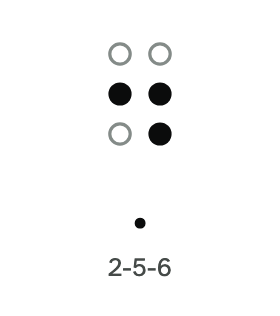
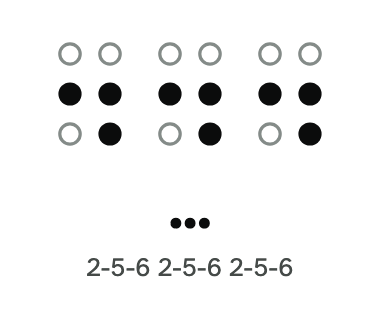
| Full stop (period)ICEB 7.1 | . | dots 2-5-6 | “It is late.”dots 6 1-3-4-6 / 2-4 2-3-4 / 1-2-3 1 2-3-4-5 1-5 2-5-6 |
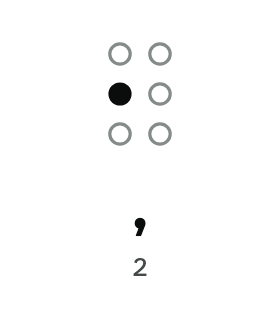
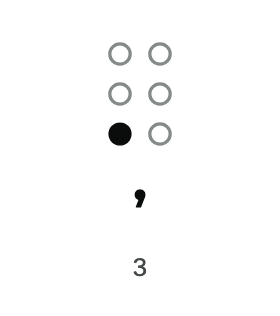
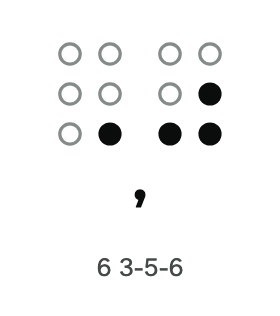
| CommaICEB 7.1 | , | dot 2 | “Yes, please.”dots 6 1-3-4-5-6 1-5 2-3-4 2 / 1-2-3-4 1-2-3 2 2-3-4 1-5 2-5-6 |
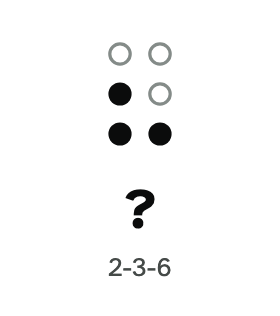
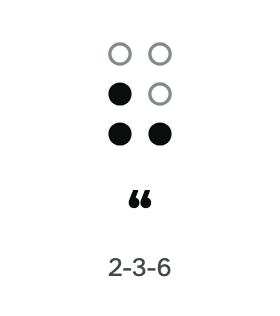
| Question markICEB 7.5 | ? | dots 2-3-6 | “Are you there?”dots 6 3-4-5 1-5 / 1-3-4-5-6 / 5 2-3-4-6 2-3-6The same cell opens a double quotation; in a few positions it needs the grade 1 indicator. |
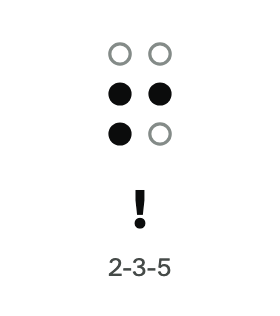
| Exclamation markICEB 7.1 | ! | dots 2-3-5 | “Stop!”dots 6 3-4 1-3-5 1-2-3-4 2-3-5 |
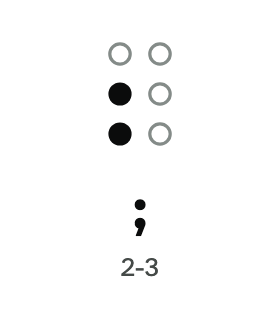
| SemicolonICEB 7.1 | ; | dots 2-3 | “Wait; listen.”dots 6 2-4-5-6 1 2-4 2-3-4-5 2-3 / 1-2-3 2-4 3-4 2-6 2-5-6 |
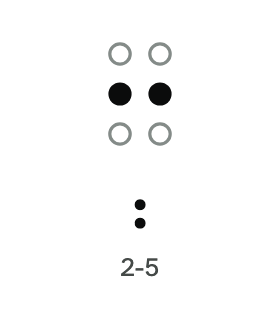
| ColonICEB 7.1 | : | dots 2-5 | “Note: read this.”dots 6 1-3-4-5 1-3-5 2-3-4-5 1-5 2-5 / 1-2-3-5 2 1-4-5 / 1-4-5-6 2-5-6 |
| ApostropheICEB 7.6 | ’ | dot 3 | “It’s mine.”dots 6 1-3-4-6 3 2-3-4 / 1-3-4 3-5 1-5 2-5-6 |
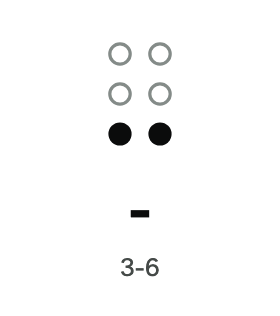
| HyphenICEB 7.2 | - | dots 3-6 | “a well-known song”dots 1 / 2-4-5-6 1-5 1-2-3 1-2-3 3-6 5 1-3 1-3-4-5 / 2-3-4 5-6 1-2-4-5 |
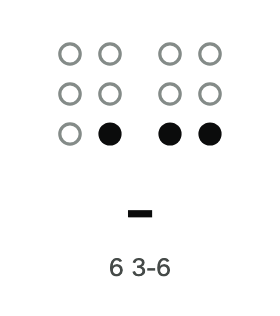
| Dash (en dash)ICEB 7.2 | – | dots 6 3-6 | “pages 4–7”dots 1-2-3-4 1 1-2-4-5 1-5 2-3-4 / 3-4-5-6 1-4-5 6 3-6 3-4-5-6 1-2-4-5UEB has one dash sign for both the en dash and the em dash, so decoding it cannot tell which print used. |
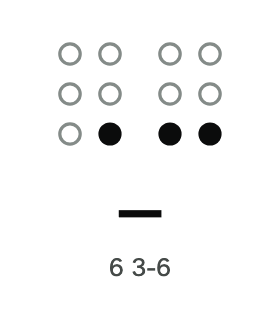
| Dash (em dash)ICEB 7.2 | — | dots 6 3-6 | “Wait—stop”dots 6 2-4-5-6 1 2-4 2-3-4-5 6 3-6 3-4 1-3-5 1-2-3-4UEB uses the long dash ⠐⠠⠤ only where print has both a short and a long dash (ICEB 7.2.4). The engine has no spelling for the print two-em dash ⸺ and lists it as unsupported. |
| EllipsisICEB 7.3 | … | dots 2-5-6 2-5-6 2-5-6 | “Well…”dots 6 2-4-5-6 1-5 1-2-3 1-2-3 2-5-6 2-5-6 2-5-6 |
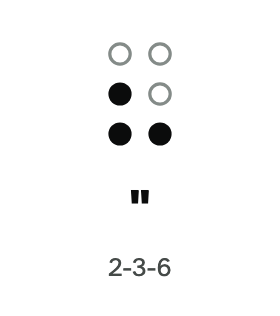
| Opening double quotation markICEB 7.6 | “ | dots 2-3-6 | “He said “yes”.”dots 6 1-2-5 1-5 / 2-3-4 1-4-5 / 2-3-6 1-3-4-5-6 1-5 2-3-4 3-5-6 2-5-6 |
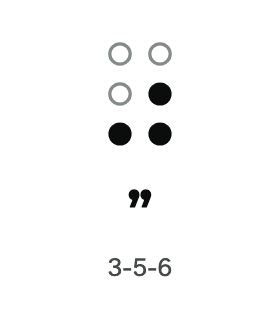
| Closing double quotation markICEB 7.6 | ” | dots 3-5-6 | “He said “yes”.”dots 6 1-2-5 1-5 / 2-3-4 1-4-5 / 2-3-6 1-3-4-5-6 1-5 2-3-4 3-5-6 2-5-6 |
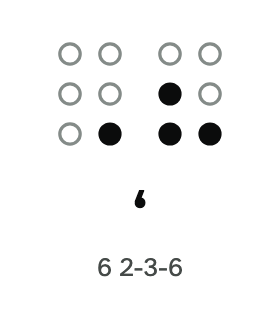
| Opening single quotation markICEB 7.6 | ‘ | dots 6 2-3-6 | “She said ‘no’.”dots 6 1-4-6 1-5 / 2-3-4 1-4-5 / 6 2-3-6 1-3-4-5 1-3-5 6 3-5-6 2-5-6 |
| Closing single quotation markICEB 7.6 | ’ | dots 6 3-5-6 | “She said ‘no’.”dots 6 1-4-6 1-5 / 2-3-4 1-4-5 / 6 2-3-6 1-3-4-5 1-3-5 6 3-5-6 2-5-6Print often uses the same character for the apostrophe. The engine decides from position: it writes ⠄ inside or after a word, but ⠠⠴ when ’ begins a word, as in ’Tis or the ’90s, where UEB uses the apostrophe ⠄. |
| Straight double quotation markICEB 7.6 | " | dots 2-3-6 | “say "hi" now”dots 2-3-4 1 1-3-4-5-6 / 2-3-6 1-2-5 2-4 3-5-6 / 1-3-4-5 2-4-6liblouis reads a straight quotation mark as opening or closing from its position, and writes the nondirectional sign ⠠⠶ where it cannot tell (ICEB 7.6). It sometimes does so where UEB uses ⠴, as in "must have"s. |
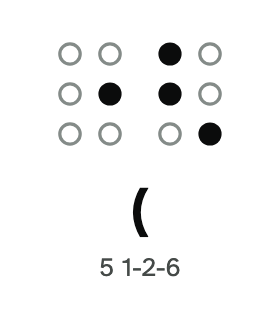
| Opening parenthesisICEB 7.1 | ( | dots 5 1-2-6 | “a note (short)”dots 1 / 1-3-4-5 1-3-5 2-3-4-5 1-5 / 5 1-2-6 1-4-6 1-3-5 1-2-3-5 2-3-4-5 5 3-4-5 |
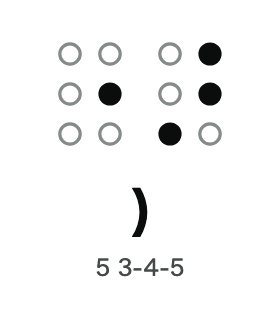
| Closing parenthesisICEB 7.1 | ) | dots 5 3-4-5 | “a note (short)”dots 1 / 1-3-4-5 1-3-5 2-3-4-5 1-5 / 5 1-2-6 1-4-6 1-3-5 1-2-3-5 2-3-4-5 5 3-4-5 |
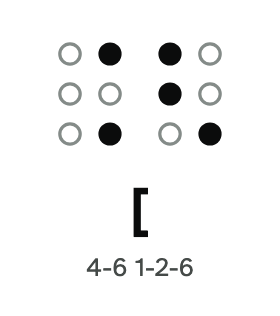
| Opening square bracketICEB 7.1 | [ | dots 4-6 1-2-6 | “the [edited] text”dots 2-3-4-6 / 4-6 1-2-6 1-2-4-6 2-4 2-3-4-5 1-2-4-6 4-6 3-4-5 / 2-3-4-5 1-5 1-3-4-6 2-3-4-5 |
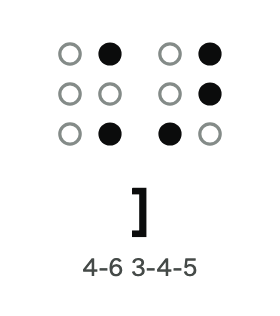
| Closing square bracketICEB 7.1 | ] | dots 4-6 3-4-5 | “the [edited] text”dots 2-3-4-6 / 4-6 1-2-6 1-2-4-6 2-4 2-3-4-5 1-2-4-6 4-6 3-4-5 / 2-3-4-5 1-5 1-3-4-6 2-3-4-5 |
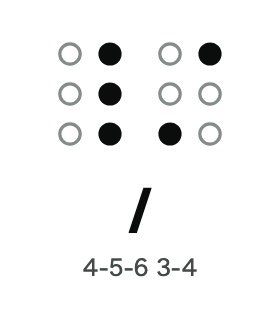
| Solidus (forward slash)ICEB 7.4 | / | dots 4-5-6 3-4 | “and/or”dots 1-2-3-4-6 4-5-6 3-4 1-3-5 1-2-3-5Not ⠌ on its own: that cell is the contraction st. |
Punctuation follows print, apart from a few rules for particular marks. (ICEB 7.1.1)
Indicators
| Name | Marks | Braille | Example |
|---|---|---|---|
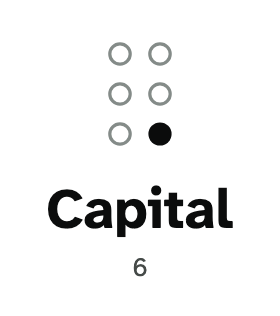
| Capital letter indicatorICEB 8.3 | one capital letter | dot 6 | “Anna”dots 6 1 1-3-4-5 1-3-4-5 1 |
| Capitalised word indicatorICEB 8.4 | a word in capitals | dots 6 6 | “the NASA mission”dots 2-3-4-6 / 6 6 1-3-4-5 1 2-3-4 1 / 1-3-4 2-4 2-3-4 4-6 1-3-4-5 |
| Capitalised passage indicatorICEB 8.5 | three or more words in capitals | dots 6 6 6 | “NOT FOR SALE NOW”dots 6 6 6 1-3-4-5 / 1-2-3-4-5-6 / 2-3-4 1 1-2-3 1-5 / 1-3-4-5 2-4-6 6 3Used for three or more capitalised words in a row; a capitals terminator ⠠⠄ closes it. |
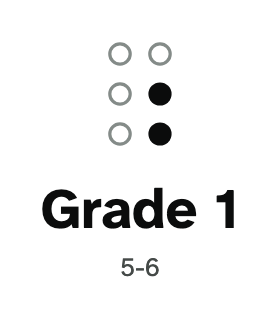
| Grade 1 symbol indicatorICEB 5.2 | a letter or sign to read as grade 1 | dots 5-6 | “plan b”dots 1-2-3-4 1-2-3 1 1-3-4-5 / 5-6 1-2b alone would read as but. |
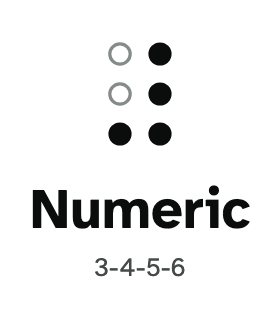
| Numeric indicatorICEB 6.1 | the start of a number | dots 3-4-5-6 | “room 12”dots 1-2-3-5 1-3-5 1-3-5 1-3-4 / 3-4-5-6 1 1-2 |
An indicator is a braille sign with no print symbol of its own; it tells the reader how to read the signs after it. (ICEB 2.1)
Symbols
| Name | Braille | Example | |
|---|---|---|---|
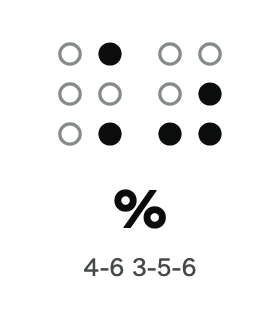
| Percent signICEB 3.21 | % | dots 4-6 3-5-6 | “50% off”dots 3-4-5-6 1-5 2-4-5 4-6 3-5-6 / 1-2-3-5-6 1-2-4 |
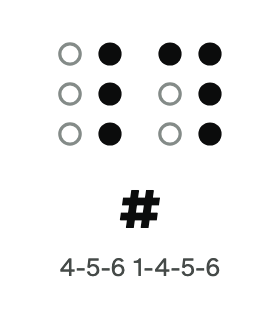
| Number sign (hash)ICEB 3.19 | # | dots 4-5-6 1-4-5-6 | “item #4”dots 2-4 2-3-4-5 1-5 1-3-4 / 4-5-6 1-4-5-6 3-4-5-6 1-4-5Not the numeric indicator ⠼. |
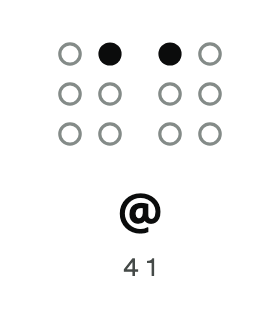
| Commercial atICEB 3.7 | @ | dots 4 1 | “me@example.com”dots 1-3-4 1-5 4 1 1-5 1-3-4-6 1 1-3-4 1-2-3-4 1-2-3 1-5 2-5-6 1-4 1-3-5 1-3-4 |
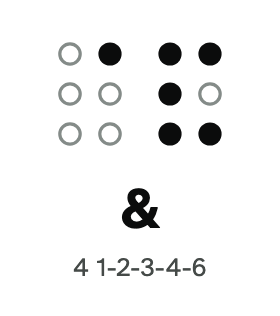
| AmpersandICEB 3.1 | & | dots 4 1-2-3-4-6 | “salt & pepper”dots 2-3-4 1 1-2-3 2-3-4-5 / 4 1-2-3-4-6 / 1-2-3-4 1-5 1-2-3-4 1-2-3-4 1-2-4-5-6 |
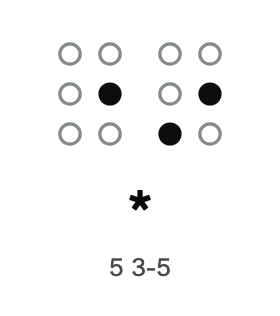
| AsteriskICEB 3.3 | * | dots 5 3-5 | “see note*”dots 2-3-4 1-5 1-5 / 1-3-4-5 1-3-5 2-3-4-5 1-5 5 3-5 |
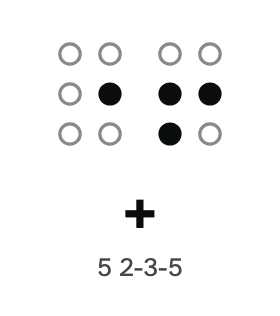
| Plus signICEB 3.17 | + | dots 5 2-3-5 | “2 + 2”dots 3-4-5-6 1-2 / 5 2-3-5 / 3-4-5-6 1-2 |
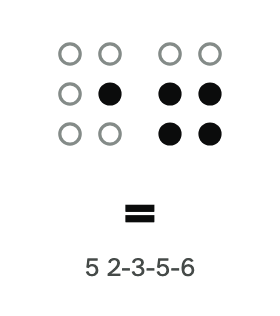
| Equals signICEB 3.17 | = | dots 5 2-3-5-6 | “2 + 2 = 4”dots 3-4-5-6 1-2 / 5 2-3-5 / 3-4-5-6 1-2 / 5 2-3-5-6 / 3-4-5-6 1-4-5 |
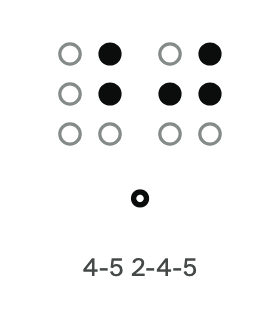
| Degree signICEB 3.11 | ° | dots 4-5 2-4-5 | “20°”dots 3-4-5-6 1-2 2-4-5 4-5 2-4-5 |
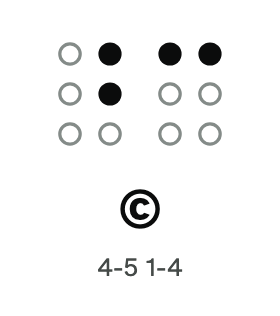
| Copyright signICEB 3.8 | © | dots 4-5 1-4 | “© 2026”dots 4-5 1-4 / 3-4-5-6 1-2 2-4-5 1-2 1-2-4 |
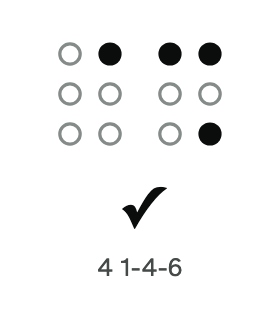
| Check mark (tick)ICEB 3.28 | ✓ | dots 4 1-4-6 | “done ✓”dots 1-4-5 5 1-3-5 / 4 1-4-6 |
Apart from a few indicators, a UEB sign of two or more cells is one or more prefixes followed by a root. The prefixes are the numeric indicator and the seven cells made only from dots 4, 5 and 6; every other cell is a root. (ICEB 1.2.5–1.2.7)
Currency
| Name | Braille | Example | |
|---|---|---|---|
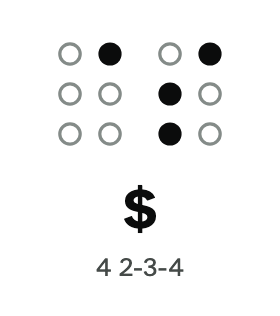
| Dollar signICEB 3.10 | $ | dots 4 2-3-4 | “$5”dots 4 2-3-4 3-4-5-6 1-5 |
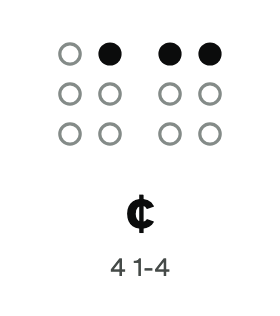
| Cent signICEB 3.10 | ¢ | dots 4 1-4 | “50¢”dots 3-4-5-6 1-5 2-4-5 4 1-4 |
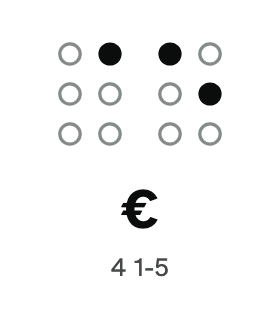
| Euro signICEB 3.10 | € | dots 4 1-5 | “€20”dots 4 1-5 3-4-5-6 1-2 2-4-5 |
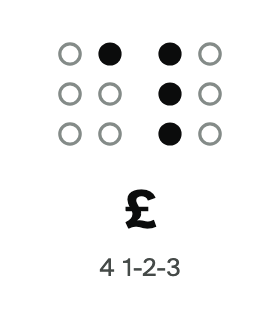
| Pound signICEB 3.10 | £ | dots 4 1-2-3 | “£20”dots 4 1-2-3 3-4-5-6 1-2 2-4-5 |
UEB’s currency signs are two cells, dot 4 and then a letter, such as ⠈⠎ for $ and ⠈⠇ for £, and they go where print puts them. (ICEB 3.10)
Signs that are easy to get wrong
These signs share a cell with another sign, change with where they sit, or come out differently from what print suggests. Each example is the engine’s own output.
The slash
The forward slash is two cells, ⠸⠌. The single cell ⠌ is the contraction for st. (ICEB 7.4)
Example: “and/or” in the table above
The # sign and the numeric indicator
The number sign (hash) is ⠸⠹, not the numeric indicator ⠼. (ICEB 3.19) People searching for the braille “number sign” may mean either: the print # is ⠸⠹ (dots 4-5-6, 1-4-5-6), and the numeric indicator ⠼ (dots 3-4-5-6) starts every number.
Example: “item #4” in the table above
Quotation marks and the question mark
Double quotation marks are one cell each, ⠦ to open and ⠴ to close. Single quotation marks put dot 6 in front: ⠠⠦ and ⠠⠴. (ICEB 7.6.1, 7.6.2) The question mark and the opening double quotation mark share the cell ⠦. At the start of a word it opens a quotation; anywhere else it is a question mark. (ICEB 7.5, 7.6.7)
Example: “He said “yes”.” in the table above
Example: “Are you there?” in the table above
A punctuation mark in a position where it would be read as a contraction takes the grade 1 indicator, such as a question mark standing alone. (ICEB 7.1.3, 7.5.3)
The apostrophe
The apostrophe is ⠄ (dot 3). Print often uses one character for both the apostrophe and the closing single quotation mark, so software has to decide from position and cannot always get it right. (ICEB 7.6.6, 7.6.13)
liblouis 3.39.0 reads a curly ’ at the start of a word as a closing single quotation mark (⠠⠴) and a straight ' in the same place as an apostrophe (⠄). (engine) The same phrase, typed both ways:
In the first, the engine reads the ’ as a closing quotation mark. If the apostrophe matters, type it as a straight ' before translating, or correct the braille by hand.
Dashes
UEB writes a dash as ⠠⠤ (dots 6, 3-6) whatever its length in print. The long dash ⠐⠠⠤ is used only when print has both a short and a long dash. (ICEB 7.2, 7.2.4) So the en dash and the em dash come out the same, and the decoder cannot tell which one print used.
A letter on its own
A letter on its own, other than a, i or o, takes the grade 1 indicator ⠰ so that it is not read as a whole word. (ICEB 2.6.1, 5.2.1, 5.7.1) The braille alphabet page has the full rule.
Example: “plan b” in the table above
Why older charts show different signs
Older codes, such as EBAE, the retired US code, used some contractions and signs that UEB dropped or changed. (ICEB 1.3.1–1.3.3) In UEB each print symbol has one braille sign, whatever the subject. (ICEB 1.2.4)
What this page does not cover
- Characters liblouis has no UEB sign for, such as the two-em dash ⸺. The translator lists each one under the output with its code point and never drops it.
- Maths, music and other technical notation, which UEB and other codes handle with their own rules.
To check a sign in your own text, paste it into the braille translator, or look up a cell in the dot finder.
Punctuation and symbol images
Free for worksheets, labels and teaching materials if you credit “UEB Translator (uebtranslator.com)”, under the CC BY 4.0 licence. Printed in ink, they are for sighted readers and cannot be read by touch.
Show all 38 images, as SVG or PNG
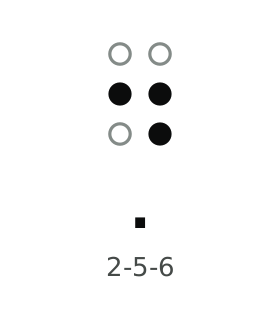
.SVG of full stop (period)PNG of full stop (period) 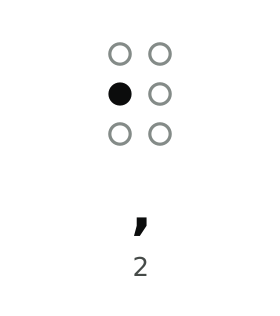
,SVG of commaPNG of comma 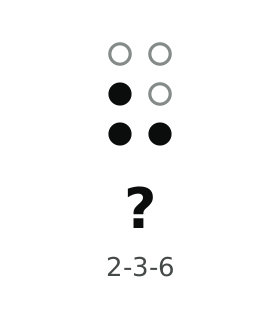
?SVG of question markPNG of question mark 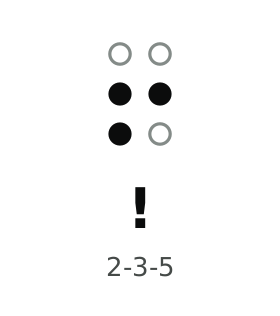
!SVG of exclamation markPNG of exclamation mark 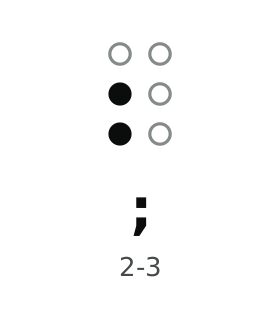
;SVG of semicolonPNG of semicolon 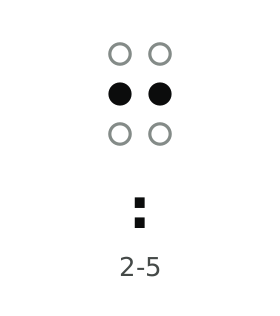
:SVG of colonPNG of colon 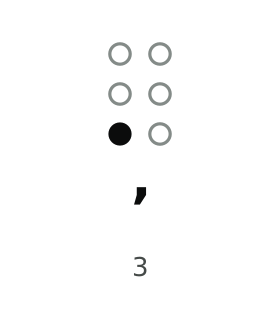
’SVG of apostrophePNG of apostrophe 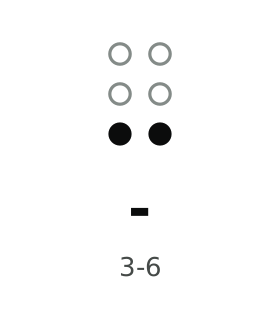
-SVG of hyphenPNG of hyphen 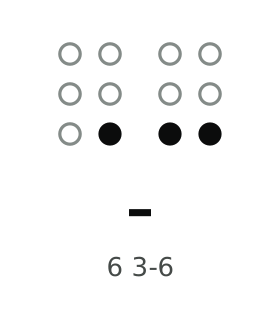
–SVG of dash (en dash)PNG of dash (en dash) 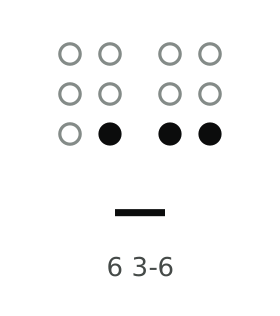
—SVG of dash (em dash)PNG of dash (em dash) 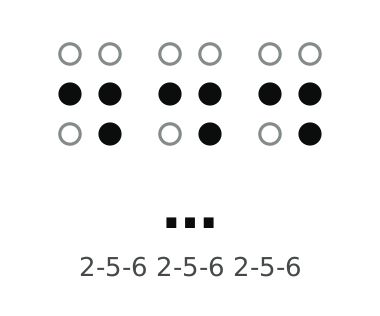
…SVG of ellipsisPNG of ellipsis 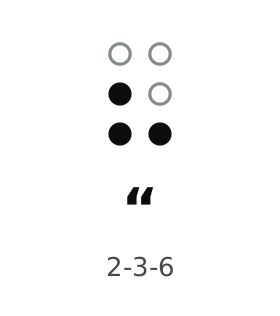
“SVG of opening double quotation markPNG of opening double quotation mark 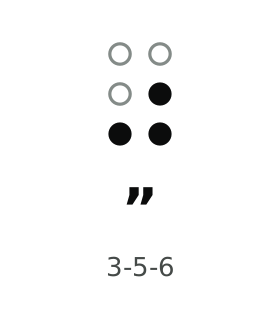
”SVG of closing double quotation markPNG of closing double quotation mark 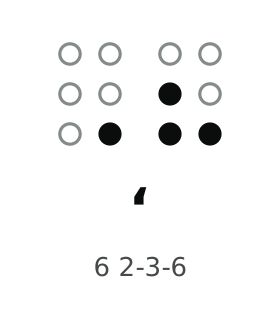
‘SVG of opening single quotation markPNG of opening single quotation mark 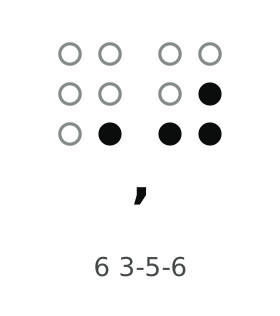
’SVG of closing single quotation markPNG of closing single quotation mark 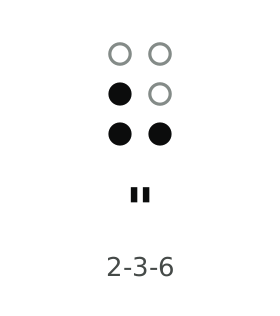
"SVG of straight double quotation markPNG of straight double quotation mark 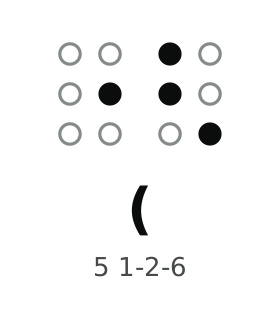
(SVG of opening parenthesisPNG of opening parenthesis 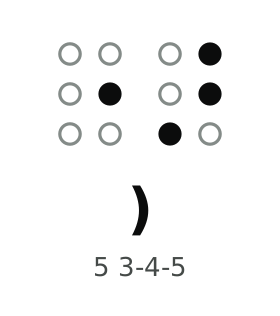
)SVG of closing parenthesisPNG of closing parenthesis 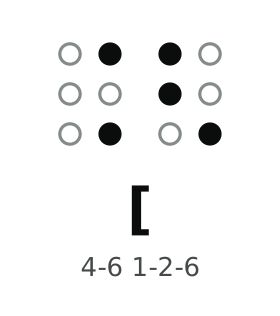
[SVG of opening square bracketPNG of opening square bracket 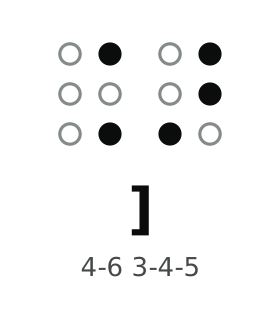
]SVG of closing square bracketPNG of closing square bracket 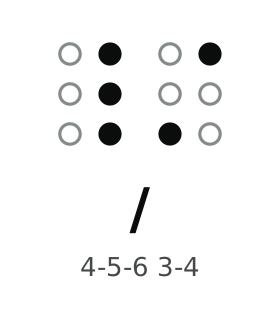
/SVG of solidus (forward slash)PNG of solidus (forward slash) 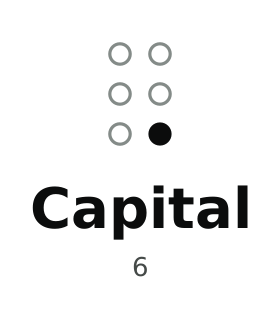
CapitalSVG of capital letter indicatorPNG of capital letter indicator 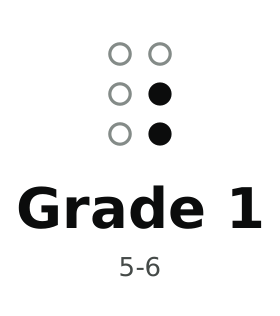
Grade 1SVG of grade 1 symbol indicatorPNG of grade 1 symbol indicator 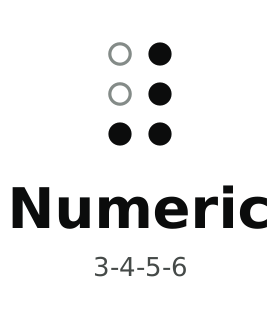
NumericSVG of numeric indicatorPNG of numeric indicator 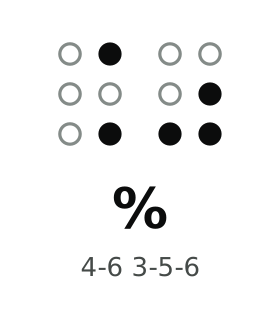
%SVG of percent signPNG of percent sign 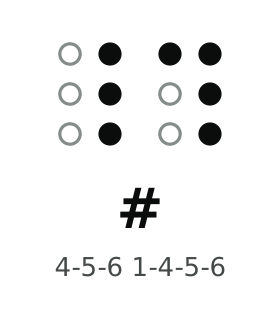
#SVG of number sign (hash)PNG of number sign (hash) 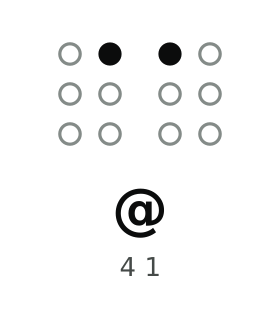
@SVG of commercial atPNG of commercial at 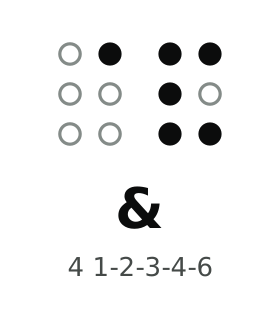
&SVG of ampersandPNG of ampersand 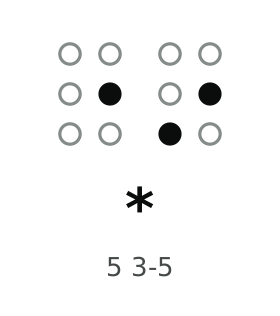
*SVG of asteriskPNG of asterisk 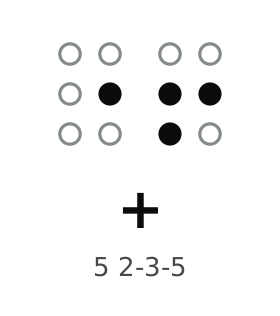
+SVG of plus signPNG of plus sign 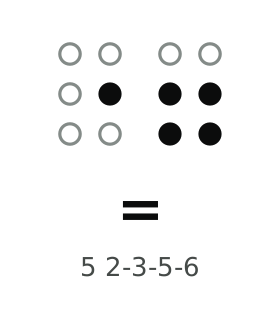
=SVG of equals signPNG of equals sign 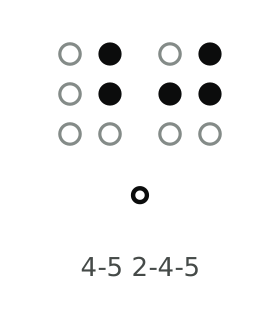
°SVG of degree signPNG of degree sign 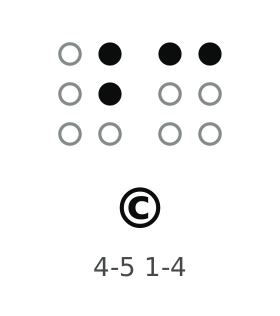
©SVG of copyright signPNG of copyright sign 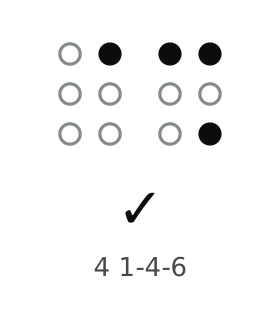
✓SVG of check mark (tick)PNG of check mark (tick) 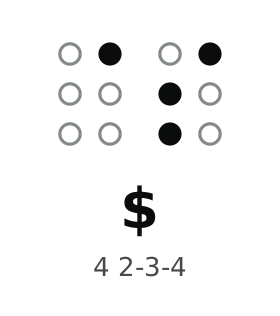
$SVG of dollar signPNG of dollar sign 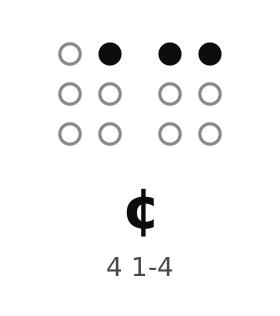
¢SVG of cent signPNG of cent sign 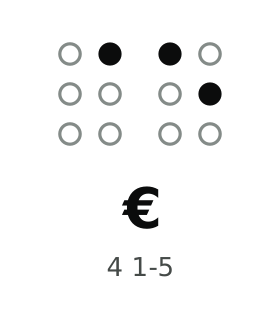
€SVG of euro signPNG of euro sign 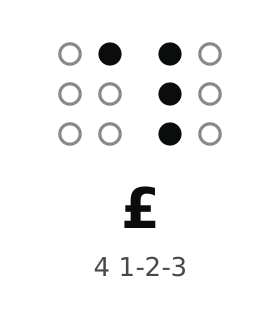
£SVG of pound signPNG of pound sign
Questions
What does a period look like in braille?
A full stop (period) is ⠲ (dots 2-5-6), the shape of d moved down one row. The same cell is the decimal point inside a number and the letter group dis at the start of a word; its position tells the reader which. It is the first row of the punctuation table.
What is the capital sign in braille?
Dot 6, ⠠, before a letter makes it a capital. Two of them capitalise a whole word, and three start a passage of three or more capitalised words, which ends with ⠠⠄ (dots 6, 3). All three are in the indicators table.
What is the braille number sign?
It depends which sign you mean. The numeric indicator ⠼ (dots 3-4-5-6) goes before a number. The print symbol #, which the rules call the number sign, is ⠸⠹ (dots 4-5-6, 1-4-5-6). Both are in the symbols table.
Why is the same cell used for a question mark and a quotation mark?
One cell, ⠦, does both jobs. At the start of a word it opens a double quotation; anywhere else it is a question mark. More under quotation marks and the question mark.
Rules: Rules of Unified English Braille, Third Edition 2024, cited by section number. Braille examples come from liblouis 3.39.0. All sources and when they were checked