Braille Alphabet
The 26 letters, their dot numbers, and the pattern that lets you learn them ten at a time.
Last updated
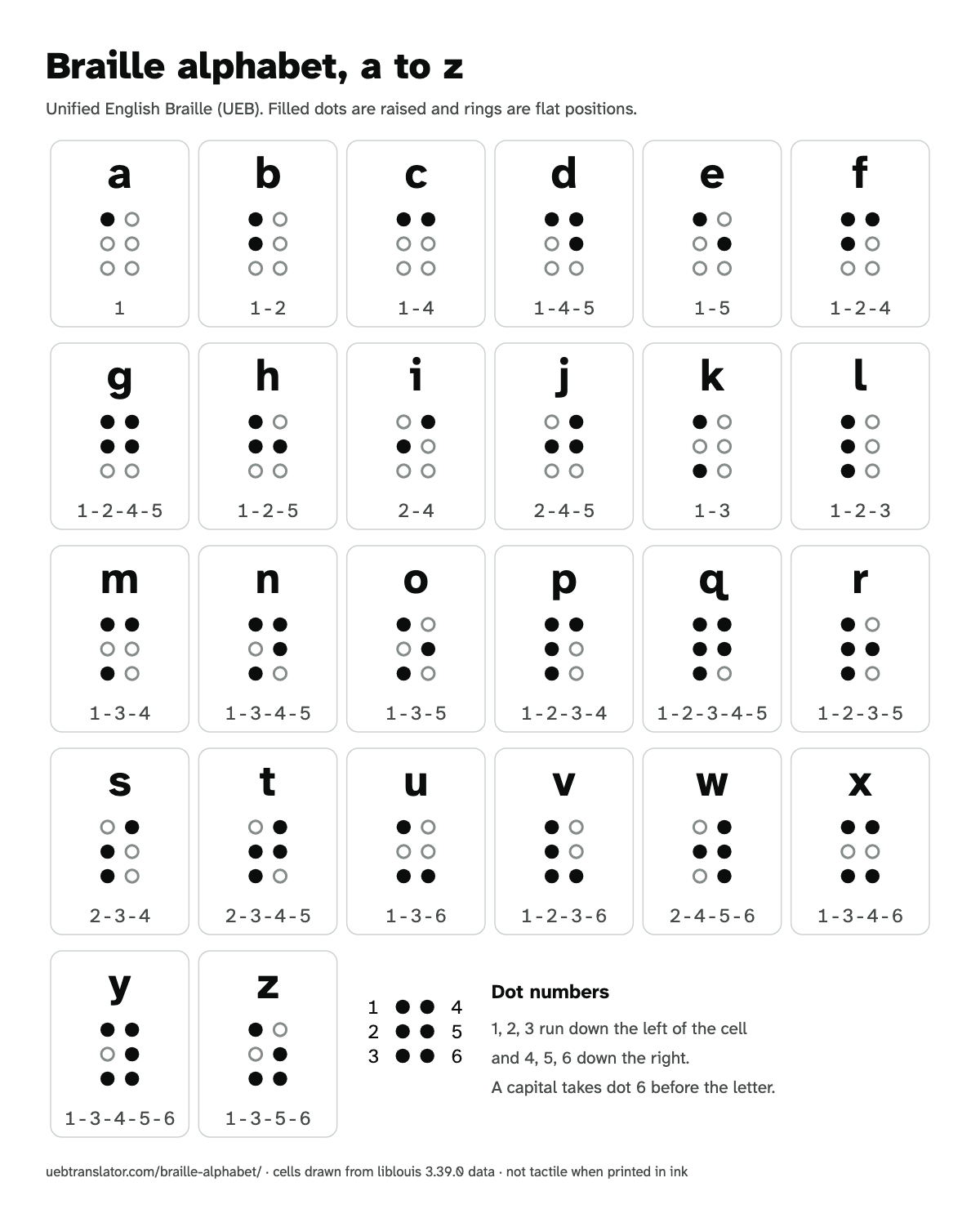
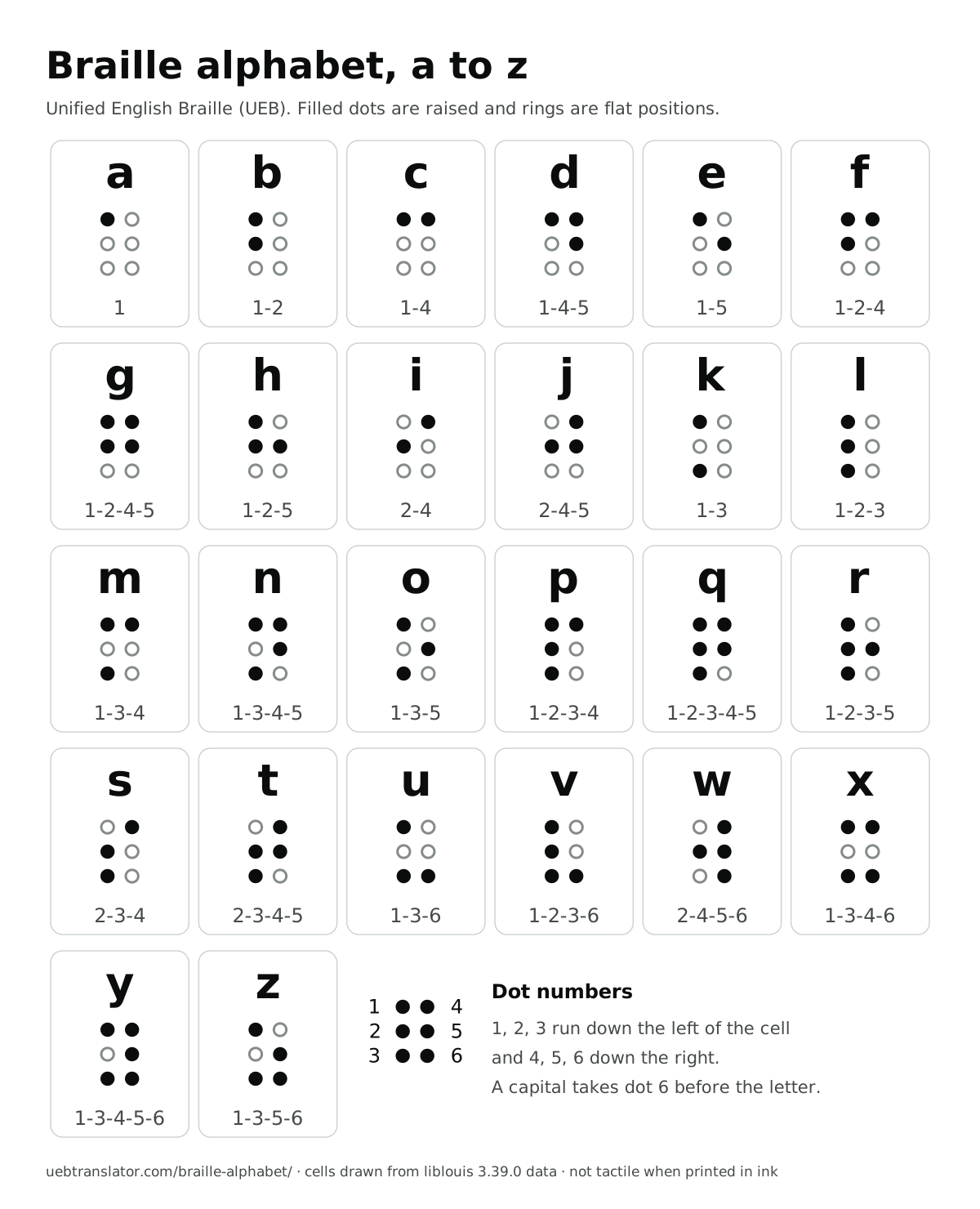
Every braille letter is one cell of six dot positions, and the 26 letters follow a pattern. The letters a to j use only the top four dots: 1, 2, 4 and 5. Letters k to t are a to j with dot 3 added, and u, v, x, y and z are a to e with dots 3 and 6 added (ICEB 1.1.2). The letter w is j with dot 6 added, outside that pattern. Louis Braille made his 1829 code for French, with w added for English. (NFB)
Printable A–Z chart
All 26 letters on one page with their dot numbers, for a wall, a desk or a worksheet. Printed in ink the dots are flat, so it is for sighted learners, not for reading by touch.
The 26 letters in braille order
Choose a letter to see what else its cell can mean. Arrow keys move between cells.
a to j
Line 1: dots 1, 2, 4 and 5 only, the top two rows of the cell.
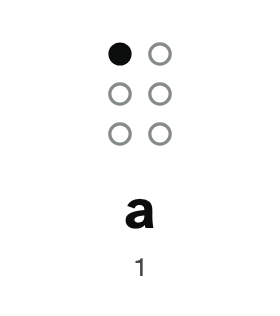
a (dot 1) can also mean:
- As a capital
- dot 6, then the letterAdots 6 1
- As a digit, after ⠼
- the digit 11dots 3-4-5-6 1
- As a letter on its own (Grade 2)
- needs nothing in front, because it is not a contractionadots 1
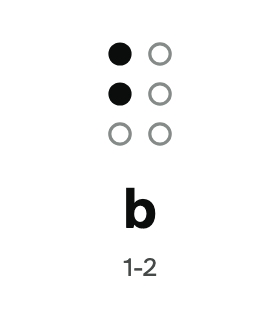
b (dots 1-2) can also mean:
- As a capital
- dot 6, then the letterBdots 6 1-2
- As a digit, after ⠼
- the digit 22dots 3-4-5-6 1-2
- As a word on its own (Grade 2)
- the word “but”butdots 1-2
- As a letter on its own (Grade 2)
- takes ⠰ (dots 5-6) first, so it is not read as the wordbdots 5-6 1-2
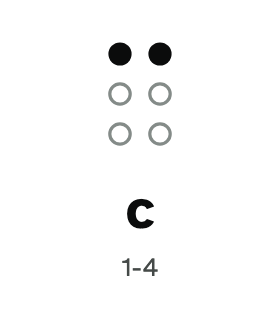
c (dots 1-4) can also mean:
- As a capital
- dot 6, then the letterCdots 6 1-4
- As a digit, after ⠼
- the digit 33dots 3-4-5-6 1-4
- As a word on its own (Grade 2)
- the word “can”candots 1-4
- As a letter on its own (Grade 2)
- takes ⠰ (dots 5-6) first, so it is not read as the wordcdots 5-6 1-4
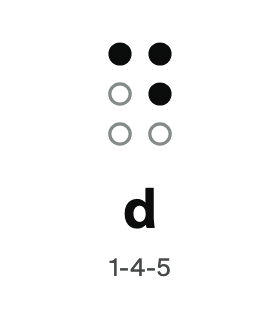
d (dots 1-4-5) can also mean:
- As a capital
- dot 6, then the letterDdots 6 1-4-5
- As a digit, after ⠼
- the digit 44dots 3-4-5-6 1-4-5
- As a word on its own (Grade 2)
- the word “do”dodots 1-4-5
- As a letter on its own (Grade 2)
- takes ⠰ (dots 5-6) first, so it is not read as the wordddots 5-6 1-4-5
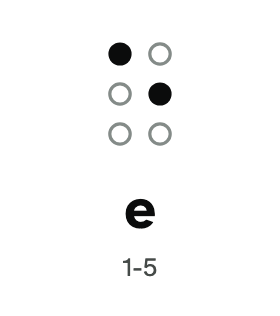
e (dots 1-5) can also mean:
- As a capital
- dot 6, then the letterEdots 6 1-5
- As a digit, after ⠼
- the digit 55dots 3-4-5-6 1-5
- As a word on its own (Grade 2)
- the word “every”everydots 1-5
- As a letter on its own (Grade 2)
- takes ⠰ (dots 5-6) first, so it is not read as the wordedots 5-6 1-5
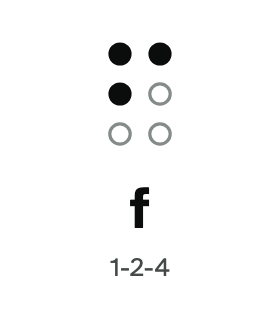
f (dots 1-2-4) can also mean:
- As a capital
- dot 6, then the letterFdots 6 1-2-4
- As a digit, after ⠼
- the digit 66dots 3-4-5-6 1-2-4
- As a word on its own (Grade 2)
- the word “from”fromdots 1-2-4
- As a letter on its own (Grade 2)
- takes ⠰ (dots 5-6) first, so it is not read as the wordfdots 5-6 1-2-4
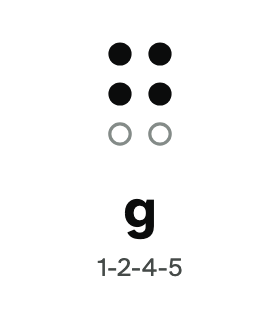
g (dots 1-2-4-5) can also mean:
- As a capital
- dot 6, then the letterGdots 6 1-2-4-5
- As a digit, after ⠼
- the digit 77dots 3-4-5-6 1-2-4-5
- As a word on its own (Grade 2)
- the word “go”godots 1-2-4-5
- As a letter on its own (Grade 2)
- takes ⠰ (dots 5-6) first, so it is not read as the wordgdots 5-6 1-2-4-5
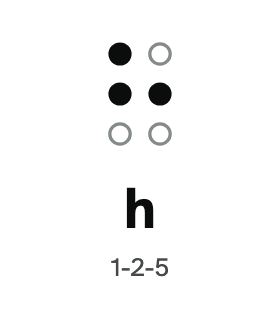
h (dots 1-2-5) can also mean:
- As a capital
- dot 6, then the letterHdots 6 1-2-5
- As a digit, after ⠼
- the digit 88dots 3-4-5-6 1-2-5
- As a word on its own (Grade 2)
- the word “have”havedots 1-2-5
- As a letter on its own (Grade 2)
- takes ⠰ (dots 5-6) first, so it is not read as the wordhdots 5-6 1-2-5
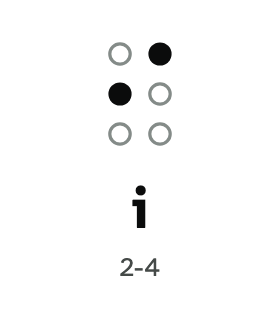
i (dots 2-4) can also mean:
- As a capital
- dot 6, then the letterIdots 6 2-4
- As a digit, after ⠼
- the digit 99dots 3-4-5-6 2-4
- As a letter on its own (Grade 2)
- needs nothing in front, because it is not a contractionidots 2-4
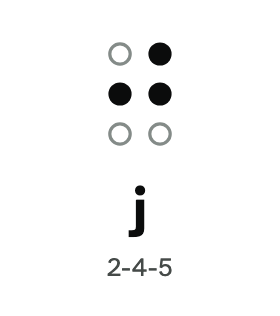
j (dots 2-4-5) can also mean:
- As a capital
- dot 6, then the letterJdots 6 2-4-5
- As a digit, after ⠼
- the digit 00dots 3-4-5-6 2-4-5
- As a word on its own (Grade 2)
- the word “just”justdots 2-4-5
- As a letter on its own (Grade 2)
- takes ⠰ (dots 5-6) first, so it is not read as the wordjdots 5-6 2-4-5
k to t
Line 2: a to j with dot 3 added.
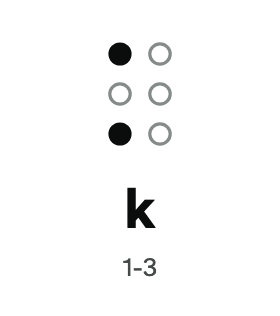
k (dots 1-3) can also mean:
- As a capital
- dot 6, then the letterKdots 6 1-3
- As a word on its own (Grade 2)
- the word “knowledge”knowledgedots 1-3
- As a letter on its own (Grade 2)
- takes ⠰ (dots 5-6) first, so it is not read as the wordkdots 5-6 1-3
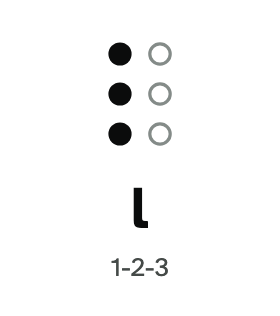
l (dots 1-2-3) can also mean:
- As a capital
- dot 6, then the letterLdots 6 1-2-3
- As a word on its own (Grade 2)
- the word “like”likedots 1-2-3
- As a letter on its own (Grade 2)
- takes ⠰ (dots 5-6) first, so it is not read as the wordldots 5-6 1-2-3
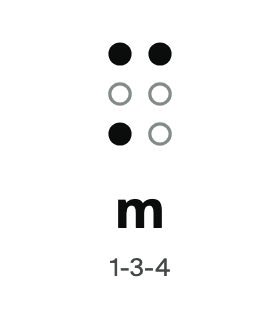
m (dots 1-3-4) can also mean:
- As a capital
- dot 6, then the letterMdots 6 1-3-4
- As a word on its own (Grade 2)
- the word “more”moredots 1-3-4
- As a letter on its own (Grade 2)
- takes ⠰ (dots 5-6) first, so it is not read as the wordmdots 5-6 1-3-4
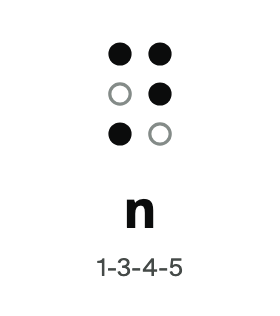
n (dots 1-3-4-5) can also mean:
- As a capital
- dot 6, then the letterNdots 6 1-3-4-5
- As a word on its own (Grade 2)
- the word “not”notdots 1-3-4-5
- As a letter on its own (Grade 2)
- takes ⠰ (dots 5-6) first, so it is not read as the wordndots 5-6 1-3-4-5
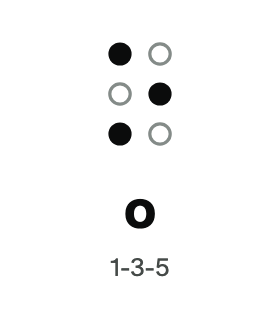
o (dots 1-3-5) can also mean:
- As a capital
- dot 6, then the letterOdots 6 1-3-5
- As a letter on its own (Grade 2)
- needs nothing in front, because it is not a contractionodots 1-3-5
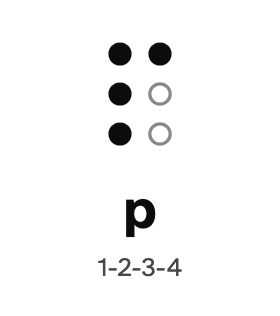
p (dots 1-2-3-4) can also mean:
- As a capital
- dot 6, then the letterPdots 6 1-2-3-4
- As a word on its own (Grade 2)
- the word “people”peopledots 1-2-3-4
- As a letter on its own (Grade 2)
- takes ⠰ (dots 5-6) first, so it is not read as the wordpdots 5-6 1-2-3-4
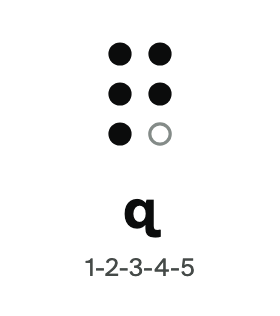
q (dots 1-2-3-4-5) can also mean:
- As a capital
- dot 6, then the letterQdots 6 1-2-3-4-5
- As a word on its own (Grade 2)
- the word “quite”quitedots 1-2-3-4-5
- As a letter on its own (Grade 2)
- takes ⠰ (dots 5-6) first, so it is not read as the wordqdots 5-6 1-2-3-4-5
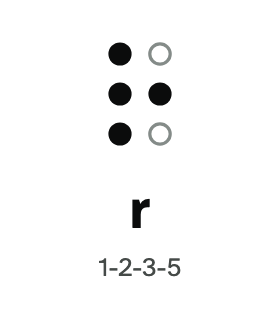
r (dots 1-2-3-5) can also mean:
- As a capital
- dot 6, then the letterRdots 6 1-2-3-5
- As a word on its own (Grade 2)
- the word “rather”ratherdots 1-2-3-5
- As a letter on its own (Grade 2)
- takes ⠰ (dots 5-6) first, so it is not read as the wordrdots 5-6 1-2-3-5
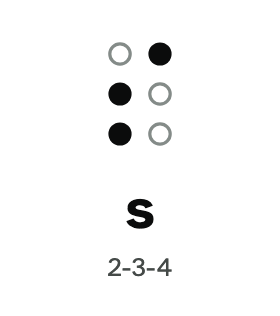
s (dots 2-3-4) can also mean:
- As a capital
- dot 6, then the letterSdots 6 2-3-4
- As a word on its own (Grade 2)
- the word “so”sodots 2-3-4
- As a letter on its own (Grade 2)
- takes ⠰ (dots 5-6) first, so it is not read as the wordsdots 5-6 2-3-4
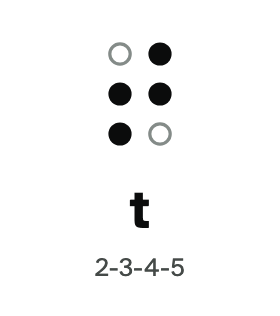
t (dots 2-3-4-5) can also mean:
- As a capital
- dot 6, then the letterTdots 6 2-3-4-5
- As a word on its own (Grade 2)
- the word “that”thatdots 2-3-4-5
- As a letter on its own (Grade 2)
- takes ⠰ (dots 5-6) first, so it is not read as the wordtdots 5-6 2-3-4-5
u, v, x, y and z
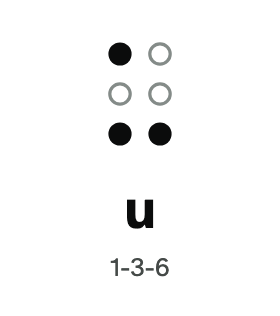
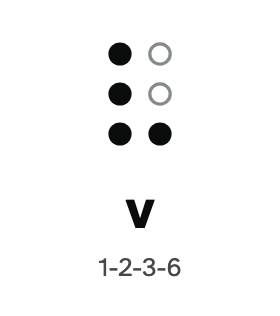
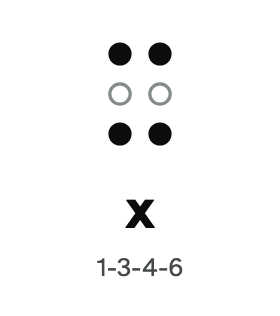
Line 3: a to e with dots 3 and 6 added.
u (dots 1-3-6) can also mean:
- As a capital
- dot 6, then the letterUdots 6 1-3-6
- As a word on its own (Grade 2)
- the word “us”usdots 1-3-6
- As a letter on its own (Grade 2)
- takes ⠰ (dots 5-6) first, so it is not read as the wordudots 5-6 1-3-6
v (dots 1-2-3-6) can also mean:
- As a capital
- dot 6, then the letterVdots 6 1-2-3-6
- As a word on its own (Grade 2)
- the word “very”verydots 1-2-3-6
- As a letter on its own (Grade 2)
- takes ⠰ (dots 5-6) first, so it is not read as the wordvdots 5-6 1-2-3-6
x (dots 1-3-4-6) can also mean:
- As a capital
- dot 6, then the letterXdots 6 1-3-4-6
- As a word on its own (Grade 2)
- the word “it”itdots 1-3-4-6
- As a letter on its own (Grade 2)
- takes ⠰ (dots 5-6) first, so it is not read as the wordxdots 5-6 1-3-4-6
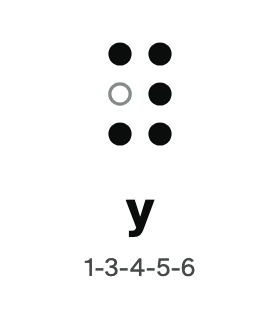
y (dots 1-3-4-5-6) can also mean:
- As a capital
- dot 6, then the letterYdots 6 1-3-4-5-6
- As a word on its own (Grade 2)
- the word “you”youdots 1-3-4-5-6
- As a letter on its own (Grade 2)
- takes ⠰ (dots 5-6) first, so it is not read as the wordydots 5-6 1-3-4-5-6
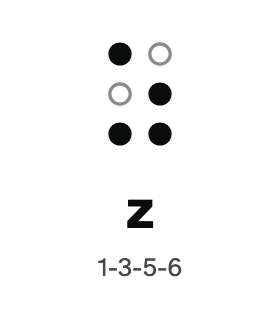
z (dots 1-3-5-6) can also mean:
- As a capital
- dot 6, then the letterZdots 6 1-3-5-6
- As a word on its own (Grade 2)
- the word “as”asdots 1-3-5-6
- As a letter on its own (Grade 2)
- takes ⠰ (dots 5-6) first, so it is not read as the wordzdots 5-6 1-3-5-6
w
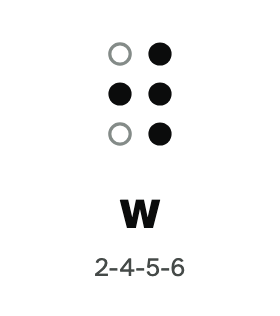
w (dots 2-4-5-6) can also mean:
- As a capital
- dot 6, then the letterWdots 6 2-4-5-6
- As a word on its own (Grade 2)
- the word “will”willdots 2-4-5-6
- As a letter on its own (Grade 2)
- takes ⠰ (dots 5-6) first, so it is not read as the wordwdots 5-6 2-4-5-6
Line 4: j with dot 6 added. Braille began as a French code, so w sits outside the u to z pattern.
How the pattern works
Braille order sets the 63 cells out in seven lines. Line 1 (a to j) uses only dots 1, 2, 4 and 5. Line 2 (k to t) adds dot 3 to each of them. Line 3 adds dots 3 and 6, and its first five cells are u, v, x, y and z. Line 4 adds dot 6, and its last cell is w. (ICEB 1.1.2)
Learn a to j and you have the rest: add dot 3 for the next ten letters, and dots 3 and 6 for the five after that.
Why w stands apart
Braille was first made for French and later adapted for English and many other languages. (ICEB 1.1.5) Louis Braille’s first published code, in 1829, used its first four lines for 39 letters of French plus the English w. (NFB) In UEB, w is still the last cell of line 4: j with dot 6 added.
The rest of lines 3 and 4
In UEB these cells are contractions, not letters. The braille contractions page lists every one.
Line 3, after z: f to j with dots 3 and 6 added
- anddots 1-2-3-4-6
- fordots 1-2-3-4-5-6
- ofdots 1-2-3-5-6
- thedots 2-3-4-6
- withdots 2-3-4-5-6
Line 4, before w: a to i with dot 6 added
- chdots 1-6
- ghdots 1-2-6
- shdots 1-4-6
- thdots 1-4-5-6
- whdots 1-5-6
- eddots 1-2-4-6
- erdots 1-2-4-5-6
- oudots 1-2-5-6
- owdots 2-4-6
What else a letter’s cell can mean
Capitals
A capital letter is two cells: dot 6 (⠠) followed by the lowercase letter. (ICEB 8.3.1) Two capital signs ⠠⠠ put the rest of a word in capitals, three ⠠⠠⠠ start a passage of three or more capitalised words, and ⠠⠄ ends capitals. (ICEB 8.4–8.6)
- Kimdots 6 1-3 2-4 1-3-4
- the UNdots 2-3-4-6 / 6 6 1-3-6 1-3-4-5
Digits
After the numeric indicator ⠼, the letters a to j are the digits 1 to 9 and 0. (ICEB 6.1) One indicator covers the whole number, so 15 is the indicator, then a, then e. Braille numbers covers dates, times and decimals.
- 15dots 3-4-5-6 1 1-5
Whole words
In Grade 2, 23 letters standing alone are whole words (ICEB 2.6, 10.1.1–10.1.2, 10.2.1–10.2.2): the word “but” is the letter b.
- butdots 1-2
- b but
- c can
- d do
- e every
- f from
- g go
- h have
- j just
- k knowledge
- l like
- m more
- n not
- p people
- q quite
- r rather
- s so
- t that
- u us
- v very
- w will
- x it
- y you
- z as
A letter on its own
In Grade 2, a letter standing alone, with a space, hyphen or dash on each side, would be read as a whole word, so it takes the grade 1 indicator ⠰ in front. The letters a, i and o need no indicator, because on their own they are not contractions. (ICEB 2.6.1, 5.2.1, 5.7.1)
- bdots 5-6 1-2
- adots 1
Letters with accents, such as é, take a modifier sign before the letter. (ICEB 4.2.1) The grid shows the 26 plain letters; the braille translator writes accented ones.
All 26 letters at a glance
One row per letter, for printing or for moving through with a screen reader’s table commands: its dots, its line, what the cell means standing alone in Grade 2, and how to write just the letter.
| Letter | Cell | Dots | Line | Standing alone in Grade 2 | Just the letter |
|---|---|---|---|---|---|
| a | 1 | 1 | the letter itself | dots 1 | |
| b | 1-2 | 1 | the word “but” | dots 5-6 1-2 | |
| c | 1-4 | 1 | the word “can” | dots 5-6 1-4 | |
| d | 1-4-5 | 1 | the word “do” | dots 5-6 1-4-5 | |
| e | 1-5 | 1 | the word “every” | dots 5-6 1-5 | |
| f | 1-2-4 | 1 | the word “from” | dots 5-6 1-2-4 | |
| g | 1-2-4-5 | 1 | the word “go” | dots 5-6 1-2-4-5 | |
| h | 1-2-5 | 1 | the word “have” | dots 5-6 1-2-5 | |
| i | 2-4 | 1 | the letter itself | dots 2-4 | |
| j | 2-4-5 | 1 | the word “just” | dots 5-6 2-4-5 | |
| k | 1-3 | 2 | the word “knowledge” | dots 5-6 1-3 | |
| l | 1-2-3 | 2 | the word “like” | dots 5-6 1-2-3 | |
| m | 1-3-4 | 2 | the word “more” | dots 5-6 1-3-4 | |
| n | 1-3-4-5 | 2 | the word “not” | dots 5-6 1-3-4-5 | |
| o | 1-3-5 | 2 | the letter itself | dots 1-3-5 | |
| p | 1-2-3-4 | 2 | the word “people” | dots 5-6 1-2-3-4 | |
| q | 1-2-3-4-5 | 2 | the word “quite” | dots 5-6 1-2-3-4-5 | |
| r | 1-2-3-5 | 2 | the word “rather” | dots 5-6 1-2-3-5 | |
| s | 2-3-4 | 2 | the word “so” | dots 5-6 2-3-4 | |
| t | 2-3-4-5 | 2 | the word “that” | dots 5-6 2-3-4-5 | |
| u | 1-3-6 | 3 | the word “us” | dots 5-6 1-3-6 | |
| v | 1-2-3-6 | 3 | the word “very” | dots 5-6 1-2-3-6 | |
| w | 2-4-5-6 | 4 | the word “will” | dots 5-6 2-4-5-6 | |
| x | 1-3-4-6 | 3 | the word “it” | dots 5-6 1-3-4-6 | |
| y | 1-3-4-5-6 | 3 | the word “you” | dots 5-6 1-3-4-5-6 | |
| z | 1-3-5-6 | 3 | the word “as” | dots 5-6 1-3-5-6 |
Letter images for worksheets
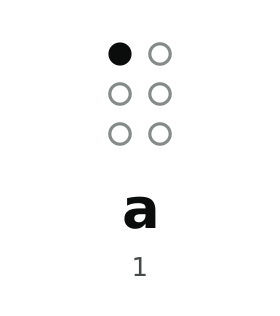
Free for worksheets, labels and teaching materials if you credit “UEB Translator (uebtranslator.com)”, under the CC BY 4.0 licence. Printed in ink, they are for sighted readers and cannot be read by touch.
Show all 26 images, as SVG or PNG
aSVG of the letter aPNG of the letter a 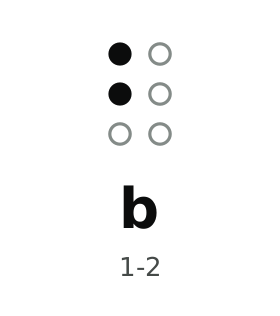
bSVG of the letter bPNG of the letter b 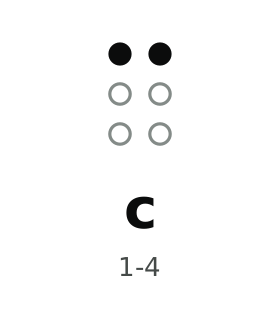
cSVG of the letter cPNG of the letter c 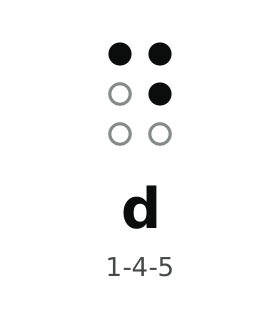
dSVG of the letter dPNG of the letter d 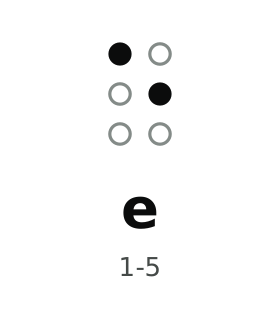
eSVG of the letter ePNG of the letter e 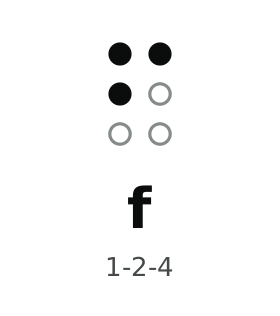
fSVG of the letter fPNG of the letter f 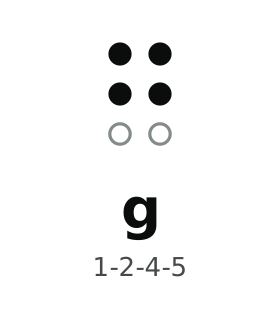
gSVG of the letter gPNG of the letter g 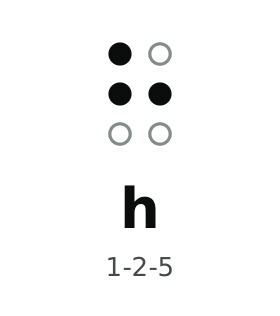
hSVG of the letter hPNG of the letter h 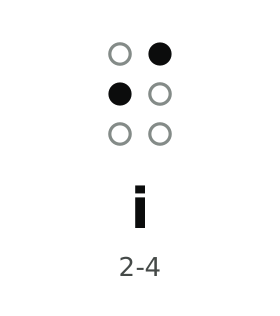
iSVG of the letter iPNG of the letter i 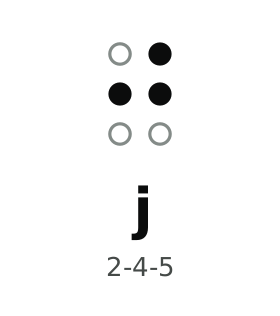
jSVG of the letter jPNG of the letter j 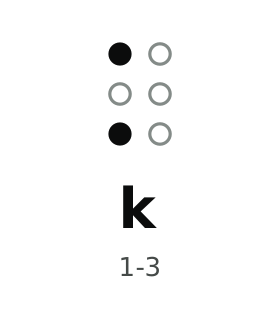
kSVG of the letter kPNG of the letter k 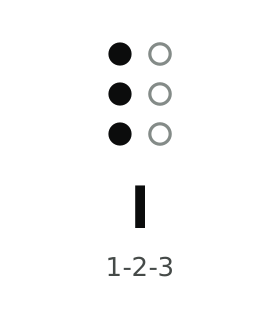
lSVG of the letter lPNG of the letter l 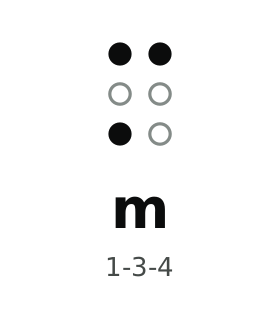
mSVG of the letter mPNG of the letter m 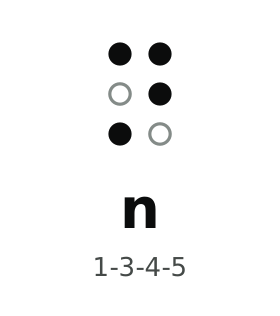
nSVG of the letter nPNG of the letter n 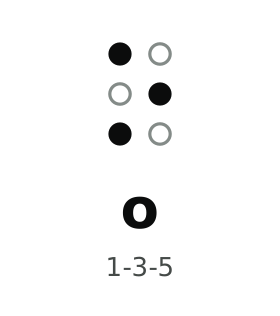
oSVG of the letter oPNG of the letter o 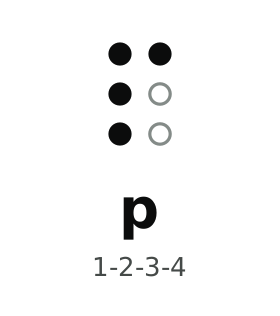
pSVG of the letter pPNG of the letter p 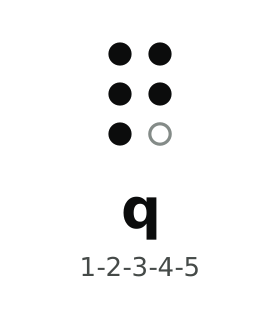
qSVG of the letter qPNG of the letter q 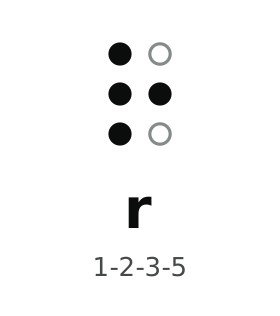
rSVG of the letter rPNG of the letter r 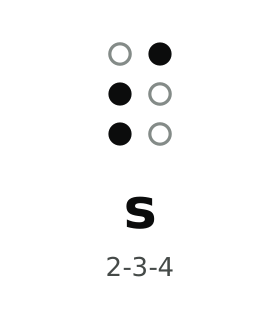
sSVG of the letter sPNG of the letter s 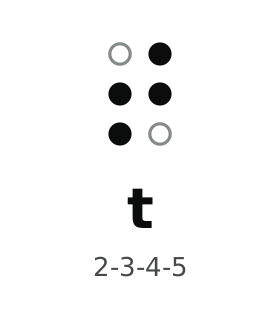
tSVG of the letter tPNG of the letter t 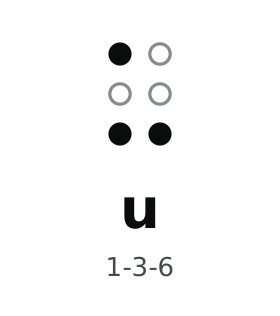
uSVG of the letter uPNG of the letter u 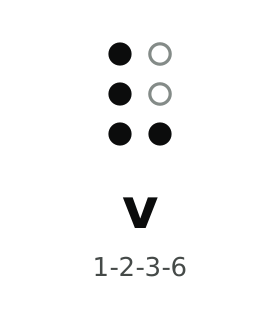
vSVG of the letter vPNG of the letter v 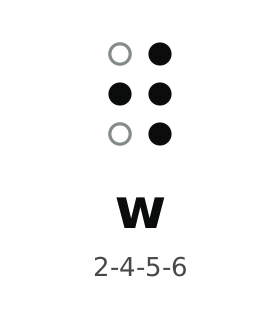
wSVG of the letter wPNG of the letter w 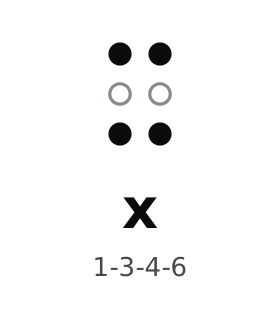
xSVG of the letter xPNG of the letter x 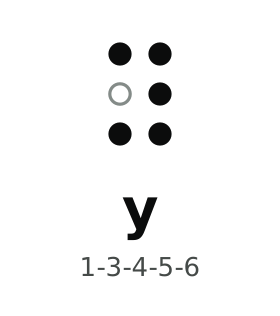
ySVG of the letter yPNG of the letter y 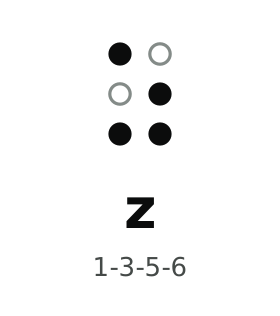
zSVG of the letter zPNG of the letter z
Questions
How many letters does the braille alphabet have?
Twenty-six, the same as print. Capitals use the same cells with a sign in front; see capitals.
Why is w not in the same pattern as u, v, x, y and z?
Braille began as a French code, and w was added for English at the end of the fourth line. The history is under why w stands apart.
Can I use the braille alphabet as a cipher?
Puzzles sometimes swap each print letter for its braille cell, and a “braille cipher” like that uses only the 26 letters on this page. Real braille is not a letter-for-letter code: in Grade 2 one cell can stand for a whole word or a group of letters, and a cell’s meaning depends on the cells around it.
How are numbers written in braille?
With the letters a to j after the numeric indicator ⠼ (dots 3-4-5-6): a is 1, b is 2, and so on to j, which is 0. The braille numbers page covers dates, times and decimals.
Rules: Rules of Unified English Braille, Third Edition 2024, cited by section number. Braille examples come from liblouis 3.39.0. All sources and when they were checked